It's official - our Beethoven Late Quartets, Vol.1 CD has been released to the world! We were happy to welcome a bunch of local friends and fans to Varnish Fine Art in downtown San Francisco to help us celebrate, and happy to perform - among other things - Beethoven's Op.133, the "Große Fuge" which will be on Volume 2 with his Quartet Op.130, to be released in late summer 2010.
We've been enjoying some great press about the new disc, as well as some great write-ups for our previous release from earlier this summer, Benjamin Lees: Quartets Nos. 1, 5 and 6 out on the Naxos label.
KBAQ, Tempe AZ has the Beethoven Late Quartets recording down as their 'CD of the Week':
Naxos has this review of the Lees Quartets recording up from critic David Denton.
We've also received a couple of very nice customer reviews of the Lees on Amazon.com.
Finally, we have a new way for you to download our self-released albums including the latest, Beethoven Late Quartets, Vol.1:
This new digital store of ours is hosted by www.Bandcamp.com which has a very slick interface that allows you to sample and purchase our music in a variety of high-quality formats. We have set the minimum per-track and per-album prices to match those of the iTunes Music Store, but you've got more formats to choose from - and you can even name your own price, if you feel so inclined as to pay more than what we're asking. Anyway, go check it out!
Thursday, August 27, 2009


Tuesday, August 11, 2009
Summer 2009 CD Releases Reviewed
With our Beethoven Late Quartets, Vol.1 CD official release just around the corner on August 25th, and our disc of Quartets Nos. 1, 5 and 6 by Benjamin Lees out on Naxos last month, word is getting out that these are new recordings well worth hearing. Check out these great reviews that have just been published:
“A Pair of Definitive Statements” (Beethoven Late Quartets, Vol.1 CD Review)
Cleveland Plain Dealer (www.cleveland.com) - August 10, 2009
“Poignant Delicacy” (Beethoven Late Quartets, Vol.1 CD Review)
Audiophile Audition (www.audaud.com) - August 10, 2009
“An Excellent Offering” (B.Lees: Quartets 1,5 and 6 CD Review)
All Music (www.allmusic.com) - August 10, 2009
Cleveland Plain Dealer (www.cleveland.com) - August 10, 2009
“Poignant Delicacy” (Beethoven Late Quartets, Vol.1 CD Review)
Audiophile Audition (www.audaud.com) - August 10, 2009
“An Excellent Offering” (B.Lees: Quartets 1,5 and 6 CD Review)
All Music (www.allmusic.com) - August 10, 2009
Stay tuned for more reviews coming soon!
Wednesday, July 29, 2009
Naxos CD Released: Lees Quartets 1,5 and 6

We are happy to spread the news this week that our recording of the 1st, 5th and 6th Quartets by Benjamin Lees has been officially released on the Naxos label. Read on to find out everything you'd ever want to know about the disc, and order or download it today at any of these fine online retailers!
The highly personal style of American composer Benjamin Lees lends his music the lofty grandeur and sardonic wit, not only of Shostakovich but also of the Cubist and Surrealist artists, all of whom he so admires. Lees, who also shares Britten’s refined sense of harmony, delights in contrasts and surprises, enthralling the listener at every turn from the lyrical to the burlesque, the romantic to the brusque. His fifth string quartet was chosen by Chamber Music America as one of its 101 Great Ensemble Works.
String Quartet No. 1 was completed in 1952 and given its première in Los Angeles in 1953. The piece received the first Fromm Foundation Award, and in 1954 was given its New York première by the legendary Budapest String Quartet. Writing of the performance, the music critic of the New Yorker Magazine Winthrop Sargeant remarked “Mr Lees’ quartet proved to be a very well-knit affair, quite fresh and original in style, and beautifully written for the instruments. I liked particularly its slow movement, which seemed to me one of the most distinguished things of its sort by a contemporary composer that I had heard in some time.” In 1955 the work was played by the Juilliard Quartet at Tanglewood.
The quartet is laid out in three movements—Moderato, Adagietto, and Allegro vivo. The first movement consists of two distinct subjects, the first brisk and energetic and the second more lyrical, both receiving formal developmental treatment. The second movement also has two distinct subjects, opening with a cantabile and moving steadily to the second Poco meno section. The movement as a whole is quite transparent and uncomplicated in its structure, ending quietly and calmly. The third movement is basically a rondo, opening with an energetic first subject that undergoes a slight development and enters a transition leading to a second subject marked Cantabile. This is expanded somewhat and leads to a transition back to the first subject. A development occurs followed by a brief transition to a third subject marked Espressivo. All subjects now undergo some development, a transition leads to the re-statement of the first subject and a spirited coda brings the movement to a close.
String Quartet No. 5 was completed in late summer 2001 for the Cypress String Quartet. It was commissioned by the Quartet as part of its Call & Response series. For this series, the Quartet selects two works from the standard quartet repertoire and commissions a third work that is to be based on inspiration derived from the two older works. Asked to respond to the quartets of Shostakovich and Britten, Benjamin Lees writes the following:
“I was drawn to Shostakovich when I was still in my early teens. His music always contained unexpected twists and turns both harmonically and rhythmically, and his sharp sardonic wit appealed to my own sense of humor. Since my taste in painting favored the Cubists and Surrealists, his music mirrored the elements found in those two schools. Shostakovich exposes raw nerves even as he suddenly reverses field and becomes jocular, only to draw the listener up short again with thematic material of somber beauty. The element of surprise is never far away. What appeals to me about Britten is his extremely refined sense of harmony and the ability to simply suggest a tonality before sliding away from it into a hazy suggestion of another. He can, briefly, whip into a full-blown tonal scale and then, quite suddenly, slide away into a harmonic haze. It always manages to keep the listener off balance.”
Lees’s Quartet No. 5 is in four movements. The first is marked Measured and is the most complex of the four. The movement is a continuous development of three contrasting elements. The second movement is marked Arioso. It opens with a lengthy dialogue between the two violins in the nature of a soliloquy. The aura of lyricism permeates this mood. It begins to alter abruptly with an outburst from the cello marked “menacing”. As the section loses power and grows quieter the two violins once again begin their romantic dialogue, this time at the very top of their instruments’ register. It is like two swallows turning over and over in air, arcing and tumbling. The third movement is the shortest of all, barely two minutes in duration. Marked Quick, quiet, it is like a zephyr, barely audible in manner. One could compare it, perhaps to a silken thread. The four players are asked to execute all this as fast and silently as possible and ending, if you will, in a puff of smoke. Movement number four is an explosive one and is marked, appropriately, Explosive. It is somewhat akin to a fughetto; the first statement is by the viola, taken up by the cello, second violin and then first violin. A section markedSlower, broader is opened by the cello and quickly echoed by the other three members. A demonic interlude leads directly to a new section distinguished by sharp, brusque figures taken up by the viola, then cello and finally the two violins. A restatement of the first section with the cello coming in first followed by the other three players leads quite suddenly and abruptly into the opening fughetto. One by one the four instruments echo the subject, extend it a bit and then bring it all to an explosive close.
String Quartet No. 5 was chosen by Chamber Music America for inclusion in its list of 101 Great Ensemble Works.
String Quartet No. 6 was written for the Cypress String Quartet and completed in January, 2005. The work comprises four movements. A composer’s fingerprint always remains the same no matter how different one work is from another, nor how many years separate each piece. The genre may range from orchestral pieces to piano concerti to operas. No matter. The fingerprint is there. In each of the four movements there are unexpected turns and resolutions. The opening of the first movement is dark, agitated, with no hint of the sudden lyrical subject that seems to appear without preparation. A slight development leads to an intense section, then back again to a quieter episode. The movement gains momentum with sharply accented passages and ends quite forcefully. The second movement is introduced with a series of quiet, calm chords. A subject in the cello is picked up by the other three instruments and the subsequent development dissolves into an episode of sharp accents. A somewhat whimsical subject appears, leading gradually to the elements of the quieter opening and then to the calm, sustained chords. The third movement, marked Quiet, eerie, is quite short. Sudden outbursts are followed by flecks of pizzicati. Quick legato passages whiz by in a unison pianissimo, rise suddenly to a fortissimo and end the movement on a triple pianissimo played pizzicatoby all four players. The fourth movement contains a few surprises. The cello opens with a calm, unhurried statement and is joined by the first violin. An unexpected outburst, brings on a restatement of the cello line. Then, another outburst and another restatement, only this time a totally different element appears, a burlesca. All four instruments engage in a prolonged tongue-in-cheek exchange until the broad outlines of the opening statement appear, this time giving way to a somewhat faster call and response exchange. The final outlines of the drive to the end appears in the form of turbulent string passages that gather momentum, becoming motoric, more violent, and finally coming to the climax, observing the marking in the score “as fast as possible”.
Benjamin Lees is an American composer of Russian parents. He was born in Harbin China on January 8, 1924 and came to the U.S. in 1925. At age five Lees began piano lessons and his studies of harmony and theory began in his teens, along with his first efforts at composition. After military service (1942-5), Lees entered the University of Southern California in Los Angeles where he studied with Halsey Stevens, Ernst Kanitz and Ingolf Dahl. From 1949 until 1954 he studied with George Antheil. In 1953 Lees' Sonata for Two Pianos and String Quartet No.1 were among those works to win the first Fromm Music Foundation Award. 1954 was a pivotal year for Lees; the first significant performance of his work occurred when the NBC Symphony performed Profiles for Orchestra. That same year he was awarded a Guggenheim Fellowship. This enabled him to leave the U.S and travel to Europe, eventually settling in a small village near Paris. His aim was to remain uninfluenced by the turbulent American scene in order to create his own style. He remained in Europe for seven years. During those years he became the first recipient of the Copley Foundation Award and received a Fulbright Fellowship. His Piano Concerto No.1 and his Symphony No 2 received their first performances. Later Lees received the UNESCO Award for String Quartet No.2 and the Sir Arnold Bax Society Medal in London, given for the first time to a non-British composer.
In 1962 he returned to the U.S where he was appointed a Professor of Composition at the Peabody Conservatory of Music in Baltimore. There he remained until 1964, when he joined the faculty of Queens College. It was while at Queens College that Lees composed Concerto for String Quartet and Orchestra (1964), a work that to date has had more than 80 performances by over 35 orchestras. In 1966 Lees returned to the faculty of the Peabody Conservatory of Music, remaining there until 1968. There he composed Piano Concerto No.2. Its first performance was given by Gary Graffman with the Boston Symphony Orchestra under Erich Leinsdorf and Lees received his second Guggenheim Fellowship. One year later he completed his Symphony No.3,and in 1970 Medea in Corinth, his one-act musical drama, was given its première at the Purcell Room, Queen Elizabeth Hall, London. In 1976 three Bicentennial commissions received their first performances: Passacaglia for Orchestra; Variations for Piano and Orchestra; and the Concerto for Woodwind Quintet and Orchestra. Lees then produced two song cycles, a score for the San Francisco Ballet, a work inspired by Alexander Calder's sculptures called Mobiles, and in 1982 the Double Concerto.His Concerto for Brass Choir and Orchestra received its world première in March 1983 by the Dallas Symphony Orchestra. In 1984 Lees completed Portrait of Rodin,his second commission from the Dallas Symphony Orchestra each of its seven sections based on a particular work by the French sculptor.
The Dallas Symphony Orchestra also commissioned the featured work on this recording. the monumental Symphony No.4 "Memorial Candles" for mezzo-soprano and violin soloist with orchestra, written to commemorate the 40th anniversary of the end of the Holocaust. The three-movement, hour-long work was given its première in 1985 with soloists Zehava Gal and Pinchas Zukerman to widespread critical acclaim. Within a year of the première it was performed by the Atlanta, Winnipeg, and Houston symphony orchestras, as well as the London Philharmonia and the Israel Philharmonic Orchestra. Lees' Symphony No 5, Odyssey II for solo piano, and String Quartet No.4 followed. In 1991 the Pittsburgh Symphony commissioned a concerto for its principal French horn player, William Caballero and, in 1994 Echoes of Normandy, was commissioned by the Dallas Symphony Orchestra to commemorate the 50th anniversary of the D-Day landings in Normandy during World War II. Lees most recent works include two commissions by the Orchestre Philharmonique de Monte Carlo,Constellations, commemorating the 700th anniversary of the Grimaldi Dynasty, and the Concerto for Percussion and Orchestra, to be premièred in Monte Carlo December 1999. His Piano Trio #3 ("Silent Voices"), was commissioned by the U.S. Holocaust Memorial Museum, Washington D.C. and premièred there May 31, 1998. The USHMM has commissioned yet another work, Night Visions for unaccompanied cello to be premièred in the 1999/2000 season. Observance, a piece for string orchestra commissioned by the New Jersey Intergenerational Orchestra will have its première February 11,1999 at the United Nations, New York.
WHERE TO BUY:
Amazon.com | Arkivmusic.com | BestBuy.com | CastleClassics.co.uk | ClassicalPulse.com (UK) | ClassicsOnline.com | emusic.com | hbdirect.com | iTunes | NaxosDirect.com | Tower.com
Friday, June 26, 2009
Summer Outlook
Writing from the Newark, NJ airport as we await our plane's arrival; due to some serious thunderstorms in the area this afternoon our plane was diverted to Philadelphia, so our return to San Francisco has been delayed a couple of hours.
This week's tour feels like a great success. We participated for the first time in the Vivace! International Music Festival at the Pennsylvania Academy of Music in Lancaster, PA, coaching student ensembles from across the U.S., Hungary and China and performing a heavy-hitting program of Mendelssohn's Quartet Op.13 and Schubert's Quartettsatz and Death & the Maiden in the Academy's beautiful new Steinman Hall.
The following day we drove back up to Jersey where we performed the same program for a virtually sold-out crowd (just over 800 people) in Princeton University's Richardson Auditorium on their Summer Concerts Series. On both concerts we were happy to oblige with an encore of a movement from Benjamin Lees' 5th Quartet, one of three (#s 1, 5 and 6) featured on the new Naxos disc that will be released in July.
If you're interested, check out our recently updated myspace page; languishing for a couple of years without a refresh, as Facebook and now Twitter have been taking up so much of people's attention, we've just gone through and replenished the content there to try and match the rest of our web-presence...
Well, the sky seems to be clearing; hopefully our plane will soon be on its way here from its Philly - oops! announcement just came over the PA system that in fact it diverted to Baltimore instead... - pit-stop and we'll find ourselves back in SF before, well, by midnight if we're lucky... Here's hoping your own travels run more smoothly this summer!
Thanks for reading,
The Cypress String Quartet
This week's tour feels like a great success. We participated for the first time in the Vivace! International Music Festival at the Pennsylvania Academy of Music in Lancaster, PA, coaching student ensembles from across the U.S., Hungary and China and performing a heavy-hitting program of Mendelssohn's Quartet Op.13 and Schubert's Quartettsatz and Death & the Maiden in the Academy's beautiful new Steinman Hall.
The following day we drove back up to Jersey where we performed the same program for a virtually sold-out crowd (just over 800 people) in Princeton University's Richardson Auditorium on their Summer Concerts Series. On both concerts we were happy to oblige with an encore of a movement from Benjamin Lees' 5th Quartet, one of three (#s 1, 5 and 6) featured on the new Naxos disc that will be released in July.
If you're interested, check out our recently updated myspace page; languishing for a couple of years without a refresh, as Facebook and now Twitter have been taking up so much of people's attention, we've just gone through and replenished the content there to try and match the rest of our web-presence...
Well, the sky seems to be clearing; hopefully our plane will soon be on its way here from its Philly - oops! announcement just came over the PA system that in fact it diverted to Baltimore instead... - pit-stop and we'll find ourselves back in SF before, well, by midnight if we're lucky... Here's hoping your own travels run more smoothly this summer!
Thanks for reading,
The Cypress String Quartet
Sunday, June 07, 2009
Montalvo Arts Center Recap, and looking ahead...
Just got back to San Francisco from Saratoga where this afternoon we performed music by Haydn, Mendelssohn, Schubert and finally Beethoven's last Quartet, Op.135 during the course of the 8th of 8 Salon Concerts at the Montalvo Arts Center to an overflow crowd of about 100 people in the intimate Main Hall of the historic Villa.
Next up, catch us at Old St. Mary's Church this Tuesday June 9th on the Noontime Concerts series there. We'll be performing Schubert's Quartettsatz and Mendelssohn's Quartet Op.13 in the hour-long concert. Read about the series here.
Finally, for those of you reading this from the East Coast, or anywhere within an easy drive of Lancaster, PA - we're coming your way later this month, to teach and perform at the Vivace! International Music Festival taking place at the Pennsylvania Music Academy's beautiful new factilities in Lancaster. The Festival's concert schedule is here.
Next up, catch us at Old St. Mary's Church this Tuesday June 9th on the Noontime Concerts series there. We'll be performing Schubert's Quartettsatz and Mendelssohn's Quartet Op.13 in the hour-long concert. Read about the series here.
Finally, for those of you reading this from the East Coast, or anywhere within an easy drive of Lancaster, PA - we're coming your way later this month, to teach and perform at the Vivace! International Music Festival taking place at the Pennsylvania Music Academy's beautiful new factilities in Lancaster. The Festival's concert schedule is here.
Wednesday, May 27, 2009
2009 Updates!
Welcome back to the Cypress Quartet blog!
Almost halfway through 2009, we have a lot to report - thanks for checking in!
This season has taken us to the Library of Congress in Washington D.C. where we performed the World Premiere of Kevin Puts' Lento assai on instruments from the Library's Cremonese Instruments collection; to Hertz Hall on the UC Berkeley campus for our Cal Performances debut; to Herbst Theatre in San Francisco for the West Coast premiere of Lento assai... Those are just a few highlights, without even mentioning our awesome south Florida tour, our string of successful Inspired by America concerts, and our fantastic residencies at Lebanon Valley College, Chamber Music Monterey Bay, Chamber Music Society of Detroit, Chamber Music Tulsa, and the Montalvo Arts Center.
Click here to view our calendar for more of what's next...
We have just received in the mail the first of three commissions for the 2009-2010 season: new works by composers Joseph Landers (Heritage Concerts, Montevallo AL), Elena Ruehr (Call & Response 2010), and Pablo Furman (a Quartet Concerto for the CSQ and the San Jose Chamber Orchestra).
Click here to read up on the first 10 years of our Call & Response commissioning project.
Finally, later this year we will be releasing two new discs of music by Benjamin Lees (on Naxos, in July) and Beethoven (on our own label, in late August).
Click here to find out more about those and other recordings that are out and available for purchase today!
Almost halfway through 2009, we have a lot to report - thanks for checking in!
This season has taken us to the Library of Congress in Washington D.C. where we performed the World Premiere of Kevin Puts' Lento assai on instruments from the Library's Cremonese Instruments collection; to Hertz Hall on the UC Berkeley campus for our Cal Performances debut; to Herbst Theatre in San Francisco for the West Coast premiere of Lento assai... Those are just a few highlights, without even mentioning our awesome south Florida tour, our string of successful Inspired by America concerts, and our fantastic residencies at Lebanon Valley College, Chamber Music Monterey Bay, Chamber Music Society of Detroit, Chamber Music Tulsa, and the Montalvo Arts Center.
Click here to view our calendar for more of what's next...
We have just received in the mail the first of three commissions for the 2009-2010 season: new works by composers Joseph Landers (Heritage Concerts, Montevallo AL), Elena Ruehr (Call & Response 2010), and Pablo Furman (a Quartet Concerto for the CSQ and the San Jose Chamber Orchestra).
Click here to read up on the first 10 years of our Call & Response commissioning project.
Finally, later this year we will be releasing two new discs of music by Benjamin Lees (on Naxos, in July) and Beethoven (on our own label, in late August).
Click here to find out more about those and other recordings that are out and available for purchase today!
Wednesday, December 12, 2007
Monday, January 29, 2007
Inspired By America Reviewed
“Multi-media 'Inspired by America' Premieres at Lied”
by Chuck Berg (Topeka Capital Journal) 1-29-07
As the house-lights faded to black, the hauntingly astringent strains of the molto adagio from Samuel Barber’s “Quartet, Op. 11” served notice that the Cypress String Quartet’s world premiere of “Inspired by America” was going to be unique.
Opening a concert in pitch black darkness -- and with a slowly unfolding and mournful movement at that -- was a bold move. For Friday night’s crowd that had come to Lawrence’s Lied Center on the strength of the Cypress String Quartet’s reputation as one of chamber music’s hot young ensembles, it was a gambit that worked.
Formed in 1996, the San Francisco-based foursome of violinists Cecily Ward and Tom Stone, violist Ethan Filner and cellist Jennifer Kloetzel displayed great poise and panache. While turning even the most difficult phrases with virtuosic aplomb, it was the group’s tonal warmth, musical breadth and ESP-like phrasing that carried the day.
The Quartet was in top form as it navigated masterfully through more than a dozen selections ranging from traditional fare such as Dvorak’s “American Quartet in F” to modern works by contemporary American composers Benjamin Lees and Dan Coleman. Regardless of style or period, the Quartet successfully found and transmitted each composition’s emotional core.
Structurally, “Inspired by America” is a spirited conversation between music, spoken word and film. On a large screen at the back of the Quartet, we “met” author Jacob Needleman who, drawing on his book “The American Soul,” offered insightful portraits of George Washington, Thomas Jefferson, Abraham Lincoln and Frederick Douglas.
In contrast to the hagiographic tendencies of much popular history, Needleman’s probes did not shy away from the great contradictions of the American story including, as one example, Jefferson’s roles as freedom-fighter and slaveholder. While also pointing to the inconvenient truths of the Native American genocide and slavery, Needleman cited Douglas’s call to conscience as a basis for continuing the challenge of righting past wrongs and moving forward with hope for all.
These difficult yet inspiring commentaries were dramatically amplified in an adroitly assembled pastiche featuring works by U.S. composers and, in the case of Dvorak, a noted European inspired by American music. At opposite ends of the emotional-thematic spectrum, Charles Ives' “Hope of the World” and Elena Ruehr’s “Red, for solo violin” provided pitch-perfect correlatives to Needleman’s poignant narrative.
The production’s thematics were further italicized by effectively edited film collages by Emmy Award-winning director Michael Schwarz, whose archival montages included historical paintings, newspaper headlines, and clips from movie newsreels.
Judging by the audience’s enthusiastic applause and lively exit conversations, it was clear that the poignantly thoughtful “Inspired by America,” by moving beyond greeting card sentimentality, more than hit the mark.
Kudos to the Cypress String Quartet and its worthy collaborators, and to the Lied Center for its part in co-commissioning this bold new work.
by Chuck Berg (Topeka Capital Journal) 1-29-07
As the house-lights faded to black, the hauntingly astringent strains of the molto adagio from Samuel Barber’s “Quartet, Op. 11” served notice that the Cypress String Quartet’s world premiere of “Inspired by America” was going to be unique.
Opening a concert in pitch black darkness -- and with a slowly unfolding and mournful movement at that -- was a bold move. For Friday night’s crowd that had come to Lawrence’s Lied Center on the strength of the Cypress String Quartet’s reputation as one of chamber music’s hot young ensembles, it was a gambit that worked.
Formed in 1996, the San Francisco-based foursome of violinists Cecily Ward and Tom Stone, violist Ethan Filner and cellist Jennifer Kloetzel displayed great poise and panache. While turning even the most difficult phrases with virtuosic aplomb, it was the group’s tonal warmth, musical breadth and ESP-like phrasing that carried the day.
The Quartet was in top form as it navigated masterfully through more than a dozen selections ranging from traditional fare such as Dvorak’s “American Quartet in F” to modern works by contemporary American composers Benjamin Lees and Dan Coleman. Regardless of style or period, the Quartet successfully found and transmitted each composition’s emotional core.
Structurally, “Inspired by America” is a spirited conversation between music, spoken word and film. On a large screen at the back of the Quartet, we “met” author Jacob Needleman who, drawing on his book “The American Soul,” offered insightful portraits of George Washington, Thomas Jefferson, Abraham Lincoln and Frederick Douglas.
In contrast to the hagiographic tendencies of much popular history, Needleman’s probes did not shy away from the great contradictions of the American story including, as one example, Jefferson’s roles as freedom-fighter and slaveholder. While also pointing to the inconvenient truths of the Native American genocide and slavery, Needleman cited Douglas’s call to conscience as a basis for continuing the challenge of righting past wrongs and moving forward with hope for all.
These difficult yet inspiring commentaries were dramatically amplified in an adroitly assembled pastiche featuring works by U.S. composers and, in the case of Dvorak, a noted European inspired by American music. At opposite ends of the emotional-thematic spectrum, Charles Ives' “Hope of the World” and Elena Ruehr’s “Red, for solo violin” provided pitch-perfect correlatives to Needleman’s poignant narrative.
The production’s thematics were further italicized by effectively edited film collages by Emmy Award-winning director Michael Schwarz, whose archival montages included historical paintings, newspaper headlines, and clips from movie newsreels.
Judging by the audience’s enthusiastic applause and lively exit conversations, it was clear that the poignantly thoughtful “Inspired by America,” by moving beyond greeting card sentimentality, more than hit the mark.
Kudos to the Cypress String Quartet and its worthy collaborators, and to the Lied Center for its part in co-commissioning this bold new work.
Thursday, January 25, 2007
Inspired By America - World Premiere
The Cypress String Quartet will present the World Premiere of Inspired By America at the Lied Center of Kansas in Lawrence, KS this Friday January 26 2007 at 7:30pm.
There will also be a pre-concert discussion and performance of a short film by Lawrence High School students starting at 6:30pm.
Inspired By America is a unique multimedia event blending live music with original film. The production team includes Emmy and Peabody Award-winner Michael Schwarz, stage and lighting designer/director Jack Carpenter, sound engineer Mark Willsher, author Jacob Needleman (The American Soul, 2001), and the Cypress String Quartet.
Friday Jan.26 2007 is the World Premiere performance in Kansas; other upcoming performances of IBA include:
the Krannert Center, University of Illinois in Champagne-Urbana Jan.28 2007
Penn State-Erie, Feb.1 2007
and further down the line in 07-08: performances in San Jose, Southern California, North Carolina, San Francisco...
Check out these links for more information:
http://www2.ljworld.com/news/2007/jan/25/string_quartet_provides_notes_high_schools_film_pr/?city_local
http://www.cypressquartet.com/iba
http://www.lied.ku.edu/06-07/events/cypress_string.shtml
http://www.lied.ku.edu/06-07/studio_lied/csq/index.shtml
Wednesday, August 23, 2006
Announcing the 2006-2007
Music & Conversation Concert Season
at SJSU
MEDIA CONTACT: 415-681-9045
________________________________
________________________________
Leading classical music innovators the Cypress String Quartet present one of the Bay Area’s most unusual and varied performance series, Music & Conversation, featuring six free performances from September 21 2006 through May 10 2007. Music & Conversation allows audience members to take a mid-day break to enjoy some of the world’s best young classical and jazz artists in performance followed by a free discourse offering insight into their work and process. 2006-2007 Music & Conversation dates and programs are listed below and each performance begins at 12:30pm in the Concert Hall of the SJSU Music Building, which is located on El Paseo de Cesar E.Chavez (Seventh Street), SJSU Campus, info hotline: 408-924-4675.
Originated by the Cypress String Quartet, Music & Conversation is a joint presentation with
The
The Cypress String Quartet has captivated audiences around the world with virtuoso performances. Featured in Chamber Music Magazine as a “Generation X ensemble to watch,” Quartet members Cecily Ward &Tom Stone, violins; Ethan Filner, viola; and Jennifer Kloetzel, cello; blend outstanding performance with innovative programming and exemplary leadership in music education and outreach.
As Quartet-in-Residence at
The
2006-2007 MUSIC & CONVERSATION SERIES
Vocalists Joe Frank and
Erie Mills has received critical and popular acclaim throughout the world, dazzling audiences with her sparkling coloratura voice, captivating personality, and vivid portrayals of operatic roles. Tenor Joseph Frank has long specialized in the lyric character tenor repertoire. He appears regularly with leading opera companies, and his recent appearances include The Marriage of Figaro for the Austin Lyric Opera; Die Fledermaus for San Diego Opera; Boris Godunov in Toulouse, France; Madama Butterfly and Turandot for the Pittsburgh Opera; and the world premiere of Nicholas and Alexandra with the Los Angeles Opera. Ms. Mills and Mr. Frank will be accompanied by Dr. Gwendolyn Mok, head of Keyboard studies at
Erie Mills, soprano Joe Frank, tenor Gwendolyn Mok, piano
Stone-Zimmerman Duo October 19
The Stone-Zimmermann Duo has been captivating audiences with their blend of superb musicianship, ravishing sound and profound interpretations. German violinist Iris Stone is a member of the New Century Chamber Orchestra and has recently performed and recorded with the Berlin Philharmonic Orchestra on the EMI label. Swiss Pianist Eva-Maria Zimmermann maintains a career on two continents. She has appeared at festivals in
Zuill Bailey and the
A multi-faceted musician of consummate virtuosity, Zuill Bailey has established himself as one of the most sought-after and active cellists today. He continues his collaboration with trio partners, pianist Navah Perlman and violinist Giora Schmidt. Mr. Bailey made his Carnegie Hall debut with the
www.zuillbailey.com www.cypressquartet.com
Luciana Souza March 1
Three-time Grammy nominee Luciana Souza hails from
Antigoni Goni March 15
Greek guitarist Antigoni Goni enjoys a truly international career. She is a professor of Guitar at the Royal Conservatory in
Amit Peled with the
Israeli cellist Amit Peled is an internationally recognized soloist. In addition to continuing his Beethoven Cycle of performances and recordings in
www.amitpeled.com www.cypressquartet.com
Admission to Music & Conversation performances is free of charge.
For more information call 415-681-9045 or visit www.cypressquartet.com
Saturday, August 19, 2006
New This Season: Inspired By America
The overall theme and subject of Inspired by America could not be more relevant to our country today. In the aftermath of 9/11 and with growing cultural divisions among us, Inspired by America invites audiences to reflect on the central question – What does it mean to be an American? By tracing our common ideals from the inception of our nation through the events that have shaped and impacted our nation’s history, our goal is to reacquaint our country’s citizens with our cultural diversity, but also with our community as Americans.
Dr. Needleman’s book sets the tone for the journey, beginning with the ideals of the Founding Fathers. The unique spirit of
Augmented by professional sound and lighting, the Cypress provides the unifying force for the performance with some of the finest chamber music composed in the United States, with movements from pieces such as Barber’s Adagio for Strings, Dvorak’s American Quartet, Griffes’ Two Sketches on Native American Themes and Gershwin’s Lullaby. Selections from recent
Educational activities springing from the performance will give people of all ages and backgrounds multiple opportunities to deepen and extend the impact of Inspired by America.
An educational website is being developed with funding and assistance from the Lied Center of Kansas, using the Internet to disemminate an Inspired by America lesson plan to educators across the country. A similar web-based system was conceived and produced by the
Interdisciplinary residency and community outreach programs will be created in conjunction with various presenting organizations around the country, featuring university level coursework as well as visits to K-12 schools. These activities will explore the rich interrelationship of great American chamber music to other disciplines, including history, political science, and literature.
The Cypress Performing Arts Association has put together a very talented and seasoned team of Bay Area professionals to produce and promote Inspired by America, including:
- Michael Schwarz: Emmy and Peabody Award winning film director/producer
- Dr. Jacob Needleman: best-selling author/philosopher
-
- Jack Carpenter: award winning stage lighting and set designer
- Mark Willsher: sound engineer, Associate Music producer for The Lord of the Rings,
- Jeff Black and Ellen Beveridge: Project Directors,
Monday, April 17, 2006
Cypress String Quartet on the Web
The Cypress String Quartet has recently joined MySpace.com! Visit the following to see the latest:
http://myspace.com/cypressstringquartet
http://groups.myspace.com/cypressstringquartet
http://blog.myspace.com/cypressstringquartet
Coming up April 28 and April 29 2006 are our 7th Annual Call & Response Concerts.
Friday April 28 at Yerba Buena Center for the Arts Forum,
7:00pm pre-concert talk by Composer George Tsontakis
7:30pm Performance
(Reception to follow)
Saturday April 29 at Le Petit Trianon in San Jose,
8:00pm Performance
Post-Concert Q&A session with the performers and composer George Tsontakis
This year's program features:
Beethoven Op.131
Beethoven Op.135
George Tsontakis String Quartet #5 (WORLD PREMIERE in SF APRIL 28)
More information available at www.cypressquartet.com/CSQOVERVIEW.htm#April2006
http://myspace.com/cypressstringquartet
http://groups.myspace.com/cypressstringquartet
http://blog.myspace.com/cypressstringquartet
Coming up April 28 and April 29 2006 are our 7th Annual Call & Response Concerts.
Friday April 28 at Yerba Buena Center for the Arts Forum,
7:00pm pre-concert talk by Composer George Tsontakis
7:30pm Performance
(Reception to follow)
Saturday April 29 at Le Petit Trianon in San Jose,
8:00pm Performance
Post-Concert Q&A session with the performers and composer George Tsontakis
This year's program features:
Beethoven Op.131
Beethoven Op.135
George Tsontakis String Quartet #5 (WORLD PREMIERE in SF APRIL 28)
More information available at www.cypressquartet.com/CSQOVERVIEW.htm#April2006
Saturday, April 08, 2006
From tour: Pocatello, ID

Mountains as backdrop to Pocatello, ID and Idaho State University, where we just performed a concert at the University's new giant Performing Arts Center.
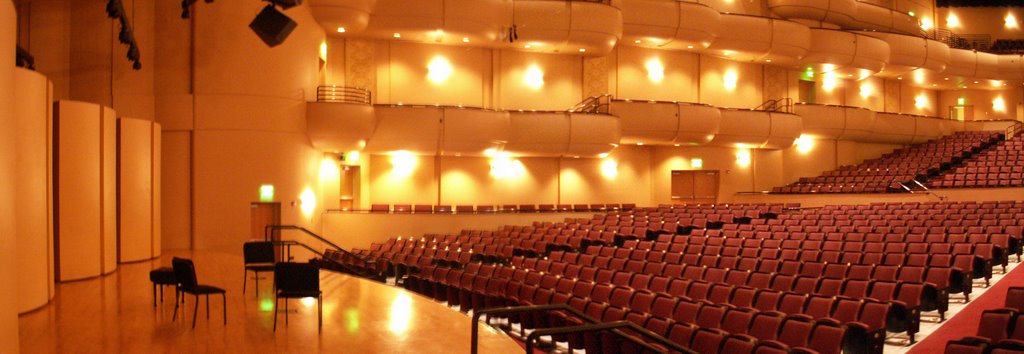 Beautiful hall, a pleasure to play in.
---
Old But Exciting News from April 2005:
Chamber Music America’s Chamber Music Magazine cover story featuring the Cypress String Quartet (April 2005)
THIS ALSO JUST IN: Massachusetts House of Representatives Resloutions: “CONGRATULATING THE CYPRESS STRING QUARTET” (April 2005)
Subscribe to:
Posts (Atom)